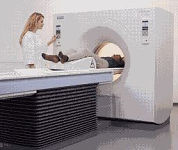
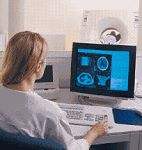
Most CT examinations are similar and include the following steps:
- Patients are encouraged to bring something to read or do in case there are any delays prior to their CT exam. Patients should wear comfortable, loose fitting clothing for their CT exam. Patient preparation for a CT examination involves removing any articles of clothing or jewelry that might degrade the CT images, such as belts, earrings, bras, glasses, dentures, hairpins, etc. Zippers and snaps common in many clothes can also cause image degradation. In some cases, the patient may be asked to wear a patient gown (such as CT imaging of the body). Many CT examinations require the oral or intravenous administration of a contrast agent, a liquid material that enhances the images of the organs and/or blood vessels.
- The patient is positioned by the technologist on the specialized CT table. The area of interest, for example the chest, is positioned inside the CT gantry opening, usually with the help of cross-hair type positioning lights. Some types of CT examination, for example a "coronal CT of the sinuses" may require the patient to be positioned in a special head holder that extends the head and neck. For such precise CT examinations, soft straps may be used to help position and immobilize the patient's head.